The Wichita people are a famous group of Native Americans. Long ago, they lived in places we now call Kansas, Oklahoma, and Texas. When we think of Native Americans who lived on the flat prairies, we usually think of people who moved around all the time. We think of people who lived in tents made of buffalo skins called tipis.
But the Wichita were different. They did not move their homes every week. They were farmers. They loved the land, and they knew how to grow food. Because they stayed in one place to watch their crops grow, they built very special houses. These houses were made of tall grass.
In this article, we will look at how they built these houses, why they were so good, and what life was like inside a Wichita village.
What is a Wichita Grass House?
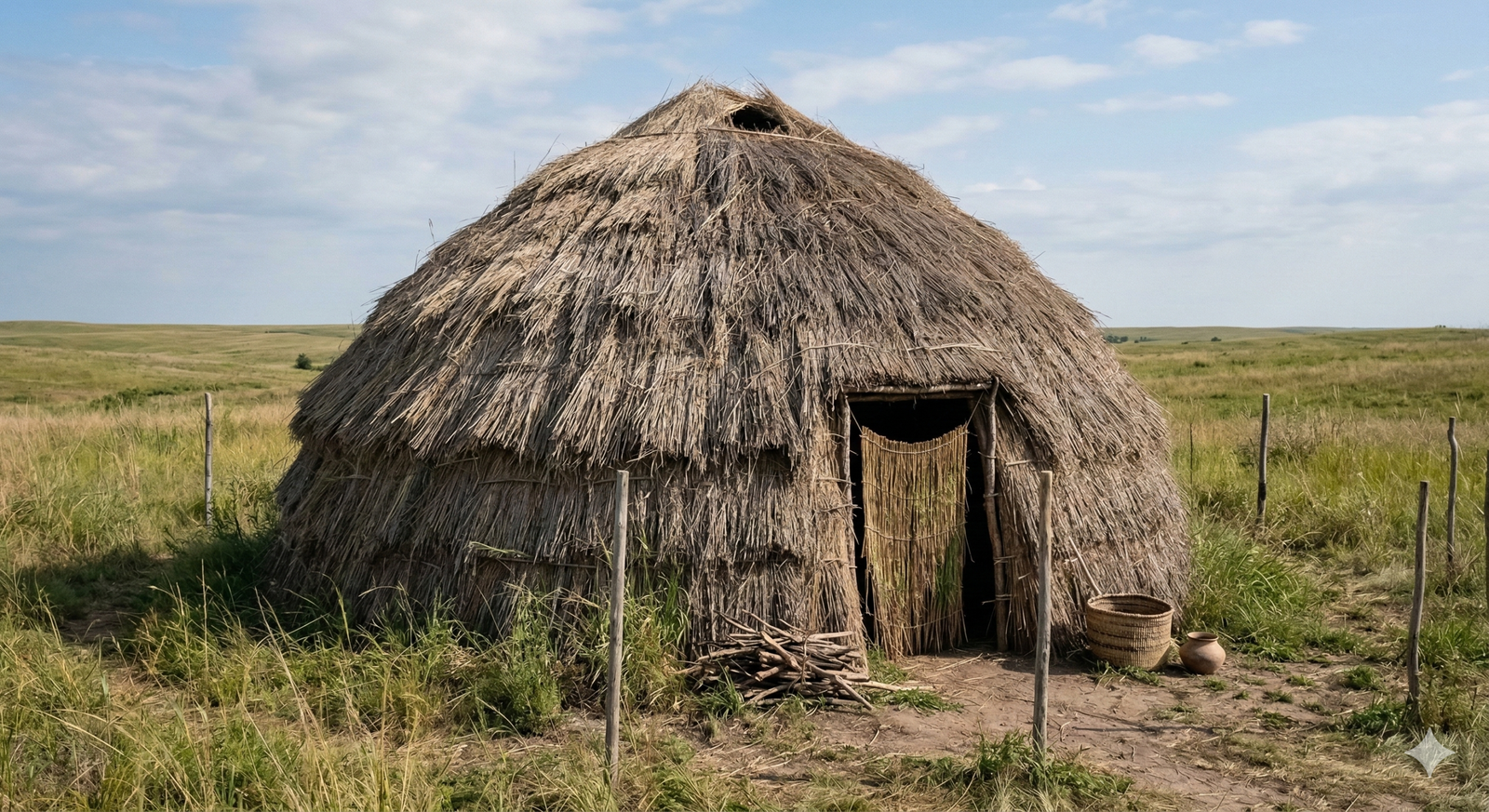
A Wichita grass house is a very large building. It is shaped like a dome or a giant beehive. If you were walking across the tall grass of the prairie a long time ago, you would see these golden houses poking up from the ground. They looked like small hills made of hay.
The Wichita called their houses wa’ahki. These houses were very strong. Even though they were made of grass and wood, they could stand up against the strong winds and big storms that happen on the plains. They were much bigger than a tent. A big grass house could be 15 to 30 feet wide. That is as big as a large living room in a modern house today!
Who Built the Houses?
In the Wichita tribe, everyone had a job. The men were usually the hunters. They went out to find buffalo and deer. The women were the builders and the farmers.The women were the architects. An architect is a person who designs a building. The women knew exactly how to make the frame of the house strong. They knew which grass was the best for keeping out the rain. When it was time to build a new house, the women in the village worked together. It was a community project. This made the work go fast, and it made the tribe very close.
Step-By-Step: How to Build a Grass House
Building a grass house was like weaving a giant basket. It took a lot of work, but the steps were simple.
Step 1: The Wooden Skeleton
First, the builders had to find the right wood. They looked for young trees like cedar or willow. These trees are “flexible,” which means they can bend without breaking.
They dug holes in the ground in a perfect circle. They put the thick ends of the poles into the holes. Then, they pulled the tops of the poles toward the center. They tied the tops together using string made from tree bark or plants. Now, they had a frame that looked like an upside-down bowl.
Step 2: Adding the Ribs
Next, they needed to make the frame stronger. They took more wooden poles and tied them sideways around the circle. These are called “ribs.” They started at the bottom and went all the way to the top. When they were done, the house looked like a wooden cage or a lattice. You could climb on this frame because it was so strong!
Step 3: Gathering the Grass
The Wichita lived in a place with “tallgrass prairie.” The grass there grows very high—sometimes taller than a person! The women would cut huge amounts of this grass. They dried it out so it would not rot.
Step 4: The Thatching
“Thatching” is the word for putting grass on a roof. The builders started at the bottom of the house. They tied big bundles of grass to the wooden ribs. They moved up the house, layer by layer.
Each new layer of grass covered the top of the layer below it. This is exactly how the shingles on the roof of your house work today. Because they overlapped, the rain would hit the grass and slide down to the ground. The inside of the house stayed completely dry.
Why Grass Houses Were Smart
The Wichita were very smart engineers. They didn’t have air conditioning or heaters, but their houses worked just as well.
Keeping Cool in Summer
The Southern Plains get very hot in the summer. If you live in a tent made of skin, it can get very sweaty and hot inside. But grass is a great “insulator.” An insulator is something that stops heat from moving. The thick layers of grass kept the hot sun from warming up the air inside. It was always shaded and breezy inside a grass house.
Staying Warm in Winter
In the winter, the wind on the prairie is very cold. The thick grass walls acted like a big, fuzzy blanket wrapped around the whole family. The Wichita would build a small fire in the middle of the house. The grass trapped the heat inside. Even when it was snowing outside, the family was warm and cozy.
Withstanding the Wind
Oklahoma and Kansas have very strong winds and tornadoes. Because the grass houses were round and heavy, the wind would blow around them instead of pushing them over. They were much safer than a flat-walled house during a storm.
Life Inside the Grass House
What was it like to live in a house made of grass? It was very different from our homes today. There were no walls inside. It was just one big room where everyone lived together.
The Center Fire
The middle of the house was the most important part. There was a fire pit dug into the dirt floor. This fire provided light, heat, and a place to cook. At the very top of the grass roof, there was a small hole. This was the “smoke hole.” It let the smoke from the fire go out so the people could breathe clean air.
The Beds
The Wichita did not sleep on the floor. They built wooden platforms all along the walls. They covered these platforms with soft buffalo robes and furs.
-
In the daytime: These were used like sofas or benches for sitting and talking.
-
In the nighttime: These were the beds for the family.
Food Storage
The Wichita were great at growing food. They grew corn, beans, squash, and pumpkins. They needed a place to keep their food so it wouldn’t spoil. They built underground “cellars” or used the space under their beds to store baskets full of dried vegetables. They always had enough food to last through the winter.
The Wichita Village
A Wichita village was a busy place. It wasn’t just one or two houses. There were often hundreds of grass houses in one area.
The Gardens
Right outside the houses were the big gardens. The Wichita were famous for their farming. They had huge fields of corn. They were so good at farming that other tribes, like the Comanche, would come to visit them. The Comanche were hunters, so they had lots of meat. The Wichita would trade their corn for the Comanche’s buffalo meat. It was a great system!
Playing Games
Life wasn’t all work. The Wichita loved to play. They played a game that was a little bit like lacrosse or field hockey. They also had races. The village plaza was a flat, open space in the middle of the houses where kids could play and adults could have meetings.
The Tipi: A Second Home
You might wonder: Did the Wichita ever use tipis? Yes, they did!
Even though they were farmers, they still liked buffalo meat. Every winter, after they harvested all their corn, the tribe would go on a big buffalo hunt. They couldn’t take their heavy grass houses with them.
So, for a few months every year, they lived in tipis. Tipis were easy to put up and take down. They would follow the buffalo herds across the plains. When spring came, they would pack up their tipis and travel back to their permanent village. They would fix up their grass houses, plant their seeds, and start the cycle again.
Why Don’t We See Many Grass Houses Today?
As time went on, life changed for the Wichita. New people moved onto their land. The government forced the Wichita to move to new places. It was hard to keep building grass houses when they were being moved around. Also, it takes a long time to build a grass house. Today, most Wichita people live in modern houses just like you. But they have not forgotten their history. The Wichita Tribe still builds grass houses today for special reasons. They build them at their tribal centers so that children can see how their ancestors lived. They use them for ceremonies and to tell stories. The grass house is a symbol of their strength and their cleverness.
9. Fun Facts about Wichita Houses
-
No Nails: The Wichita didn’t use a single metal nail to build their homes. Everything was tied together with plants and bark.
-
Doors: Most houses had two doors—one facing East and one facing West. This let the wind blow through to keep it cool.
-
Smell: A grass house smelled very good! It smelled like dry hay and sweet prairie plants.
-
Strong: A well-built grass house could last for 10 or 15 years before it needed to be rebuilt.
10. Conclusion
The Wichita tribe were the great architects of the Southern Plains. While other people were moving around, the Wichita built solid, beautiful homes out of the earth and the grass.
Their houses show us that they were a peaceful people who loved their families and their land. They knew how to use nature to stay comfortable. They weren’t just “surviving” on the plains; they were living well.
The next time you see a field of tall grass, think about the Wichita. Think about how they could turn that grass into a warm, dry, and happy home for their families. It is a great example of how humans can be very creative and live in harmony with the world around them.