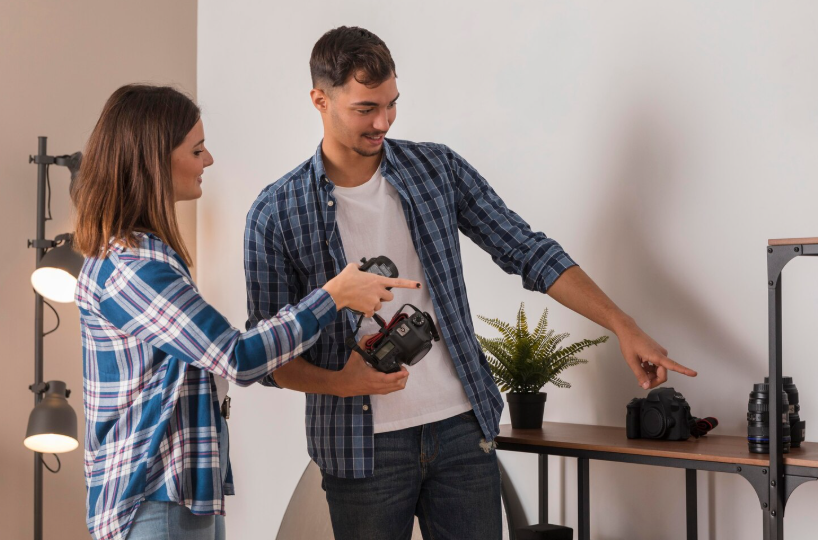
You line up the perfect shot, press the shutter, and… it’s blurry. If that sounds familiar, you’re not alone. Shaky hands are one of the most common reasons photos turn out soft or unusable especially when shooting handheld in low light or with zoom lenses.
The good news? This problem is completely fixable. Whether you’re a beginner using a smartphone or an intermediate photographer with a DSLR or mirrorless camera, there are proven techniques to eliminate camera shake and capture crisp, sharp images.
In this guide, you’ll learn real-world strategies, technical fundamentals, and practical tips to help you confidently shoot without blur.
Real-World Experience (Experience)
Shaky hands show up most often when conditions aren’t ideal. Think about shooting at a wedding reception where the lights are dim, or capturing street photography at night while moving quickly. In these moments, you don’t always have the luxury of a tripod.
Many photographers rely on simple habits in the field like leaning against a wall, holding their breath briefly while shooting, or bracing their elbows against their body. These aren’t just tricks they’re survival skills developed over years of shooting in unpredictable environments.
For example, during travel photography, you might find yourself on a crowded street with no stable surface. In such cases, even resting your camera on a railing or using your camera strap for tension can significantly reduce shake. These small adjustments often make the difference between a blurry shot and a keeper.
What Causes Shaky Hands in Photography? (Expertise)
To fix the issue, it’s important to understand why it happens. Camera shake occurs when your camera moves slightly during the exposure. Even tiny movements can cause blur, especially at slower shutter speeds.
Key Factors Behind Camera Shake:
1. Shutter Speed
The slower your shutter speed, the more time your camera has to capture movement including your hand movements.
2. Reciprocal Rule
A widely accepted guideline: your shutter speed should be at least the reciprocal of your focal length. For example, if you’re shooting at 50mm, use at least 1/50s. At 200mm, aim for 1/200s or faster.
3. Focal Length Impact
The longer your lens, the more noticeable even small shakes become. Telephoto lenses amplify motion.
4. Image Stabilization
Modern cameras and lenses often include stabilization systems (like optical or in-body stabilization), which help reduce shake—but they’re not magic. You still need proper technique.
Proven Techniques to Fix Shaky Hands (Authoritativeness)
1. Use a Faster Shutter Speed
This is the most effective fix. If your images are blurry, increase your shutter speed immediately.
2. Hold Your Camera Properly
- Use both hands
- Keep elbows tucked into your body
- Support the lens from below
3. Stabilize Your Body
- Stand with feet shoulder-width apart
- Lean against walls, poles, or tables
- Sit or kneel when possible
4. Use Burst Mode
Taking multiple shots increases your chances of getting one sharp image.
5. Use the Viewfinder
Holding the camera to your eye adds an extra point of contact, making it more stable than shooting with the screen.
Step-by-Step Guide to Reduce Camera Shake
- Check your shutter speed first—raise it if it’s too slow
- Adjust ISO to maintain exposure
- Hold your camera with a firm but relaxed grip
- Tuck your elbows into your body
- Take a deep breath, then gently press the shutter
- Shoot in bursts for better results
- Review and adjust as needed
Follow this sequence every time you shoot, and it will quickly become second nature.
Best Camera Settings for Sharp Photos
Daylight Photography
- Use low ISO (100–200)
- Shutter speed: 1/200s or faster
- Aperture: based on depth of field needs
Low-Light Photography
- Increase ISO (800–3200 or higher if needed)
- Use the widest aperture possible
- Keep shutter speed as fast as possible without underexposing
Moving Subjects
- Use fast shutter speeds (1/500s or higher)
- Enable continuous autofocus
- Use burst mode
Balancing these settings is key. Don’t be afraid to raise ISO slight noise is better than a blurry image.
Body Control & Breathing Techniques
Many photographers overlook this, but your body plays a huge role in stability.
Breathing Technique:
- Take a deep breath
- Exhale slowly
- Press the shutter gently at the end of the exhale
Posture Tips:
- Keep your body relaxed, not stiff
- Distribute weight evenly
- Avoid sudden movements
These techniques are often used by professionals and even sharpshooters because they significantly reduce micro-movements
Gear That Helps Reduce Camera Shake
Tripods
Best for landscapes, long exposures, and low-light scenes. They provide maximum stability.
Monopods
More portable than tripods great for sports or wildlife photography.
Gimbals
Ideal for video and smooth motion shots.
Stabilized Lenses
Lenses with built-in stabilization help reduce minor hand movements.
Camera Straps
Using a neck or shoulder strap with tension can add extra stability when shooting handheld.
Gear helps—but remember, technique always comes first.
Common Mistakes to Avoid (Trustworthiness)
- Using shutter speeds that are too slow
- Relying completely on image stabilization
- Holding the camera with one hand
- Jerking the shutter button instead of pressing gently
- Ignoring proper posture
- Not checking images after shooting
Avoiding these mistakes alone can dramatically improve your results.
Quick Checklist for Sharp Photos
Before taking a shot, run through this checklist:
- ✔ Is my shutter speed fast enough?
- ✔ Am I holding the camera properly?
- ✔ Are my elbows tucked in?
- ✔ Can I stabilize myself against something?
- ✔ Am I using burst mode if needed?
- ✔ Are my settings optimized for lighting conditions?
This simple routine can instantly boost your photo sharpness.
Conclusion
Fixing shaky hands in photography isn’t about having the most expensive gear .it’s about mastering the basics. With the right combination of technique, settings, and awareness, you can dramatically improve your image sharpness.
Start by focusing on shutter speed, stabilize your body, and practice consistently. Over time, these habits will become automatic, and blurry photos will become a thing of the past.
Remember: even professional photographers deal with shaky conditions. The difference is they know how to adapt. Now, so do you.
you can read- Make a Table Comparing Memory Foam vs Hybrid Mattresses 2026