
There’s a specific kind of frustration that every dedicated journaler knows: you sit down with something real to say, and the pen betrays you. The ink bleeds through to the next page. Your words smear while the line is still wet. The tip skips mid-sentence, right in the middle of something important. Suddenly, the moment is gone.
After Ten years of daily journaling through grief, career changes, creative blocks, and ordinary Tuesday mornings. I’ve tested dozens of pens across every category. I’ve written through thick-paper Leuchtturm1917s, thin Hobonichi pages, basic composition notebooks, and traveler’s journals. What follows isn’t a list assembled from product specs. It’s a practical breakdown of what actually works, why it works, and who it works best for.
What Makes a Great Journaling Pen? (The Criteria That Actually Matter)
Before we get into the list, it helps to understand the four factors that separate a great journaling pen from a mediocre one:
Ink chemistry. Pigment-based inks resist water and fading far better than dye-based inks critical if you want your journals to survive decades. Gel ink sits between ballpoint and rollerball in terms of viscosity, offering a smooth flow without the bleed risk of liquid inks. Hybrid ballpoint formulas dry fast and suit everyday, high-volume writing.
Bleed-through and ghosting. Bleed-through means ink soaking to the reverse side; ghosting means a faint impression visible from behind. Both depend on the relationship between your ink and your paper a pen that bleeds on thin copy paper may be flawless on 80gsm journal stock.
Tip size. For journaling, most writers land between 0.3mm and 0.7mm. Finer tips (0.05–0.3mm) give you precision and more words per page; broader tips feel more expressive and are easier on the hand.
Physical comfort over time. A 10-minute entry is forgiving. A 45-minute stream-of-consciousness session exposes every flaw in grip design, pen weight, and ink pressure. A good journaling pen should feel effortless, not exhausting.
With that foundation laid, here are the seven best pens you can put in your hand today.
The Top 7 Best Pens for Journaling in 2026
1. Sakura Pigma Micron — Best Overall for Archival Quality
Best for: Writers who want permanence, precision, and professional-grade results in 2026.
The Pigma Micron is arguably the most respected fineliner in the journaling world, and for good reason. Sakura developed its proprietary Pigma ink formula over 30 years ago with a specific goal: to create an ink that is chemically stable, waterproof, fade-resistant, and safe for archival use. It has become the preferred pen in research laboratories, by professional archivists, and among illustrators and journalers have quietly adopted it for the same reasons.
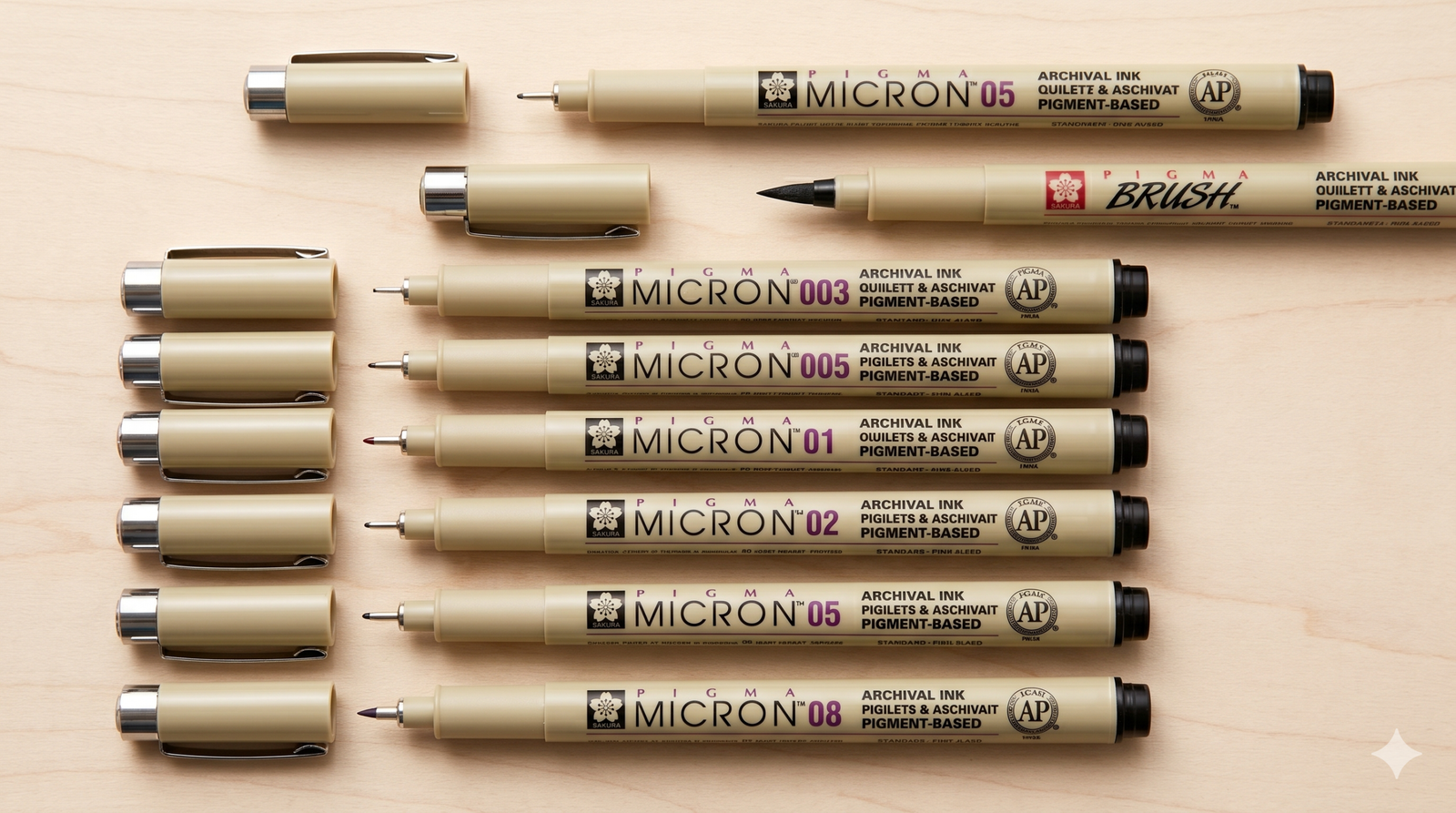
Available in six nib sizes from 0.20mm (005) to 0.50mm (08), the Micron gives you genuine control over your line weight. The ink doesn’t smear when dry, doesn’t feather on quality paper, and won’t bleed through most standard journal pages. If your writing is something you intend to preserve grief journals, therapy notes, milestone records this is the pen that won’t let those words fade.
The one practical caveat: leave it uncapped and it dries out faster than most. Cap discipline is non-negotiable. Also note it’s a fineliner, not a gel pen the tactile experience is different from what many writers are used to.
Price range: $2–$4 per pen | Tip sizes: 005, 01, 02, 03, 05, 08
2. Pentel EnerGel — Best Gel Pen for Everyday Writing
Best for: High-volume journalers, left-handed writers, anyone who values smooth speed.
The EnerGel consistently outperforms the Pilot G2 the bestselling gel pen in the world in blind tests run by pen enthusiasts, and the gap is especially noticeable at the 0.7mm size. The ink is vivid, the lines are smooth, and critically, the quick-dry formula means smudging is rarely an issue even moments after writing.
For left-handed journalers in particular, the EnerGel is often described as life-changing. Most gel pens require a fraction of a second longer than comfortable to dry, and that’s exactly the window where left-handers drag their palm through fresh ink. The EnerGel closes that window considerably.
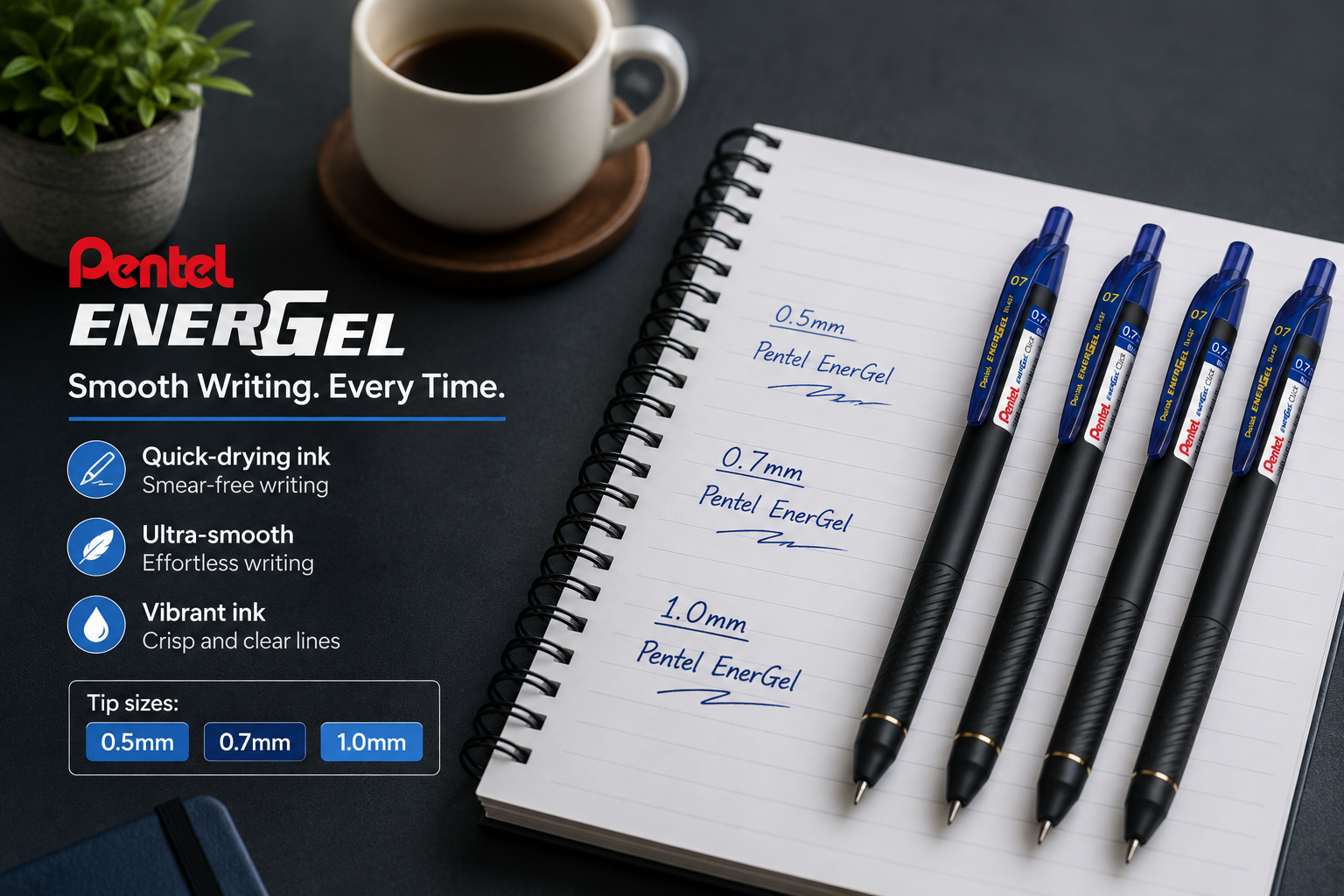
The comfortable barrel, accessible price point, and availability in multiple tip sizes (0.3, 0.5, and 0.7mm) make this the default recommendation for someone starting their journaling practice and wanting a reliable, affordable pen that won’t get in the way.
Price range: $2–$3 per pen | Tip sizes: 0.3mm, 0.5mm, 0.7mm
3. Uni-ball Jetstream — Best for Fast, High-Volume Writing
Best for: Writers who journal daily and prioritize speed and consistency.
The Jetstream is a hybrid ballpoint pen, a category that uses an oil-based ink infused with elements of gel technology. The result is something that dries faster than a gel pen but writes far more smoothly than a traditional ballpoint. It doesn’t skip. It doesn’t blob. It rarely fails.
Among pen enthusiasts and productivity-focused writers, the Jetstream has developed a quiet cult following precisely because it demands nothing from you. You pick it up, you write, it works. On virtually any paper, in virtually any condition. The smudge-free ink is reliable enough that you can highlight over fresh writing almost immediately without disaster.
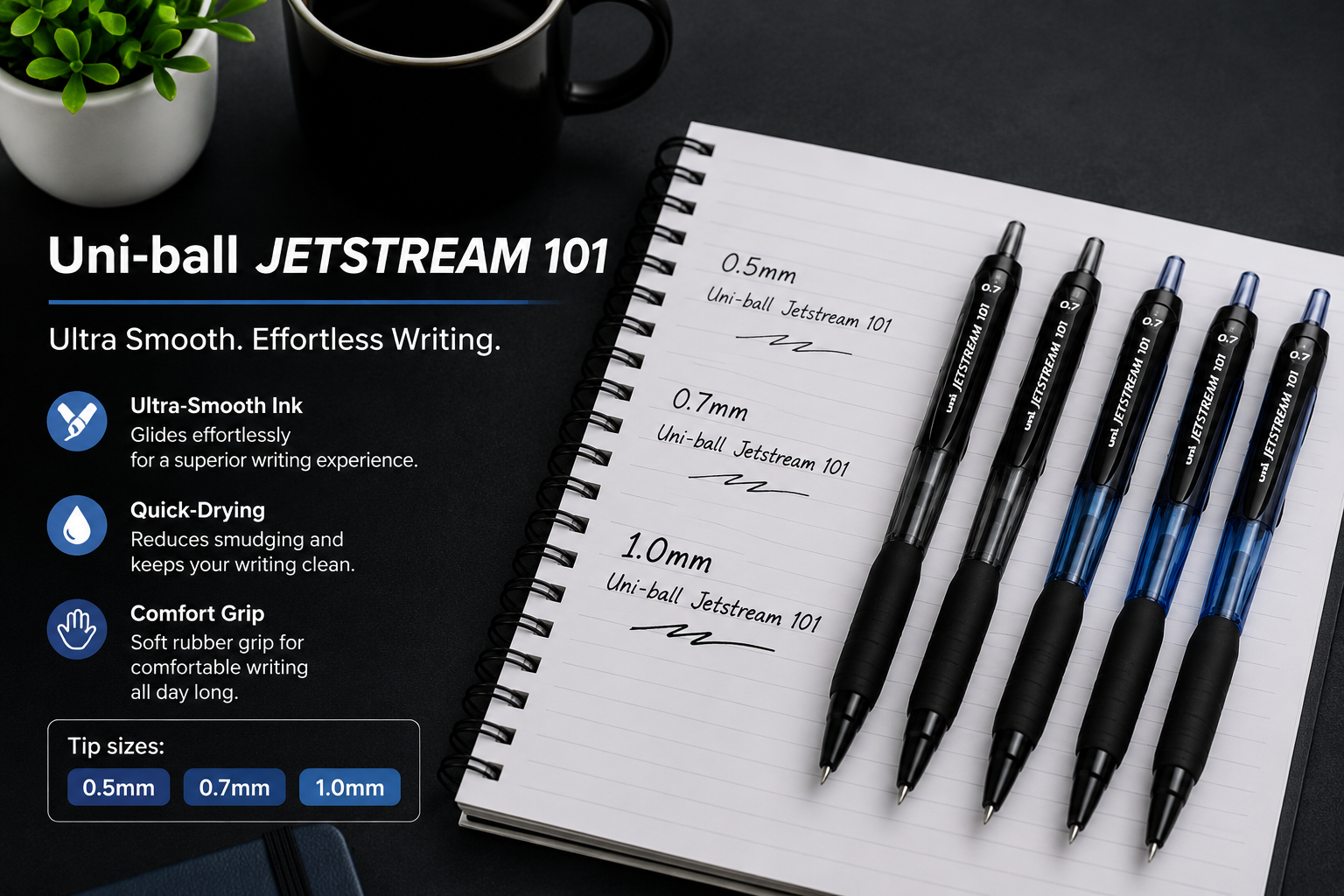
It’s not the most emotionally expressive pen on this list the line quality is functional rather than beautiful. But for daily entries, to-do reflections, and the mundane-but-vital work of showing up to the page consistently, the Jetstream is one of the best tools available.
Price range: $3–$6 per pen | Tip sizes: 0.5mm, 0.7mm, 1.0mm
4. Pilot G2 — Best Budget Gel Pen with Proven Reliability
Best for: Writers on a budget who want consistency and wide availability.
The G2 is the world’s bestselling gel pen, and while specialty pen reviewers will correctly point out that the EnerGel writes more smoothly, the G2 has something no other pen can offer at its price: it’s everywhere. Every pharmacy, bookshop, and corner store carries it. When your preferred pen is unavailable, the G2 is always there.
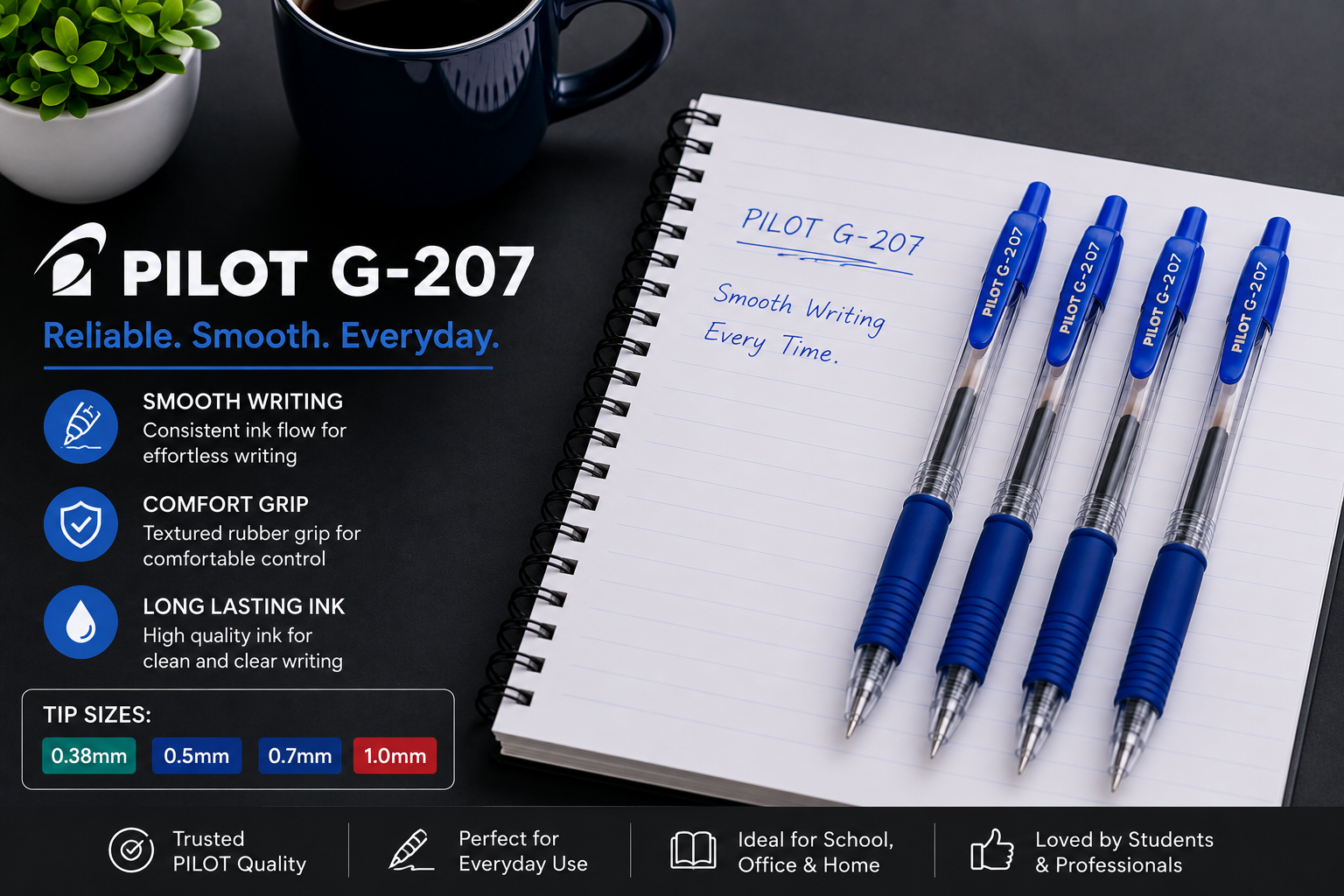
Beyond convenience, the G2 genuinely earns its place. The gel ink is smooth, the lines are consistent, and the refillable barrel means less waste over time. It writes beautifully on quality journal paper. The 0.38mm version, in particular, is underrated for journaling — fine enough for neat, dense entries without the fragility of a true ultra-fine tip.
The knock on the G2 is that it can be slower to dry than alternatives, making smearing an issue on coated papers. On standard journal stock, though, this is rarely a problem.
Price range: $2–$3 per pen | Tip sizes: 0.38mm, 0.5mm, 0.7mm, 1.0mm
5. Tombow Fudenosuke Brush Pen — Best for Expressive & Artistic Journaling
Best for: Bullet journalers, decorative writers, anyone who wants their pages to feel intentional and beautiful.
The Fudenosuke is not a traditional writing pen. It’s a brush pen with a firm, controlled tip that allows for genuine line variation — press harder and the stroke widens; ease up and it narrows. For journalers who incorporate hand lettering, headers, banners, or decorative elements, it transforms the journal page from a document into something closer to a personal art object.
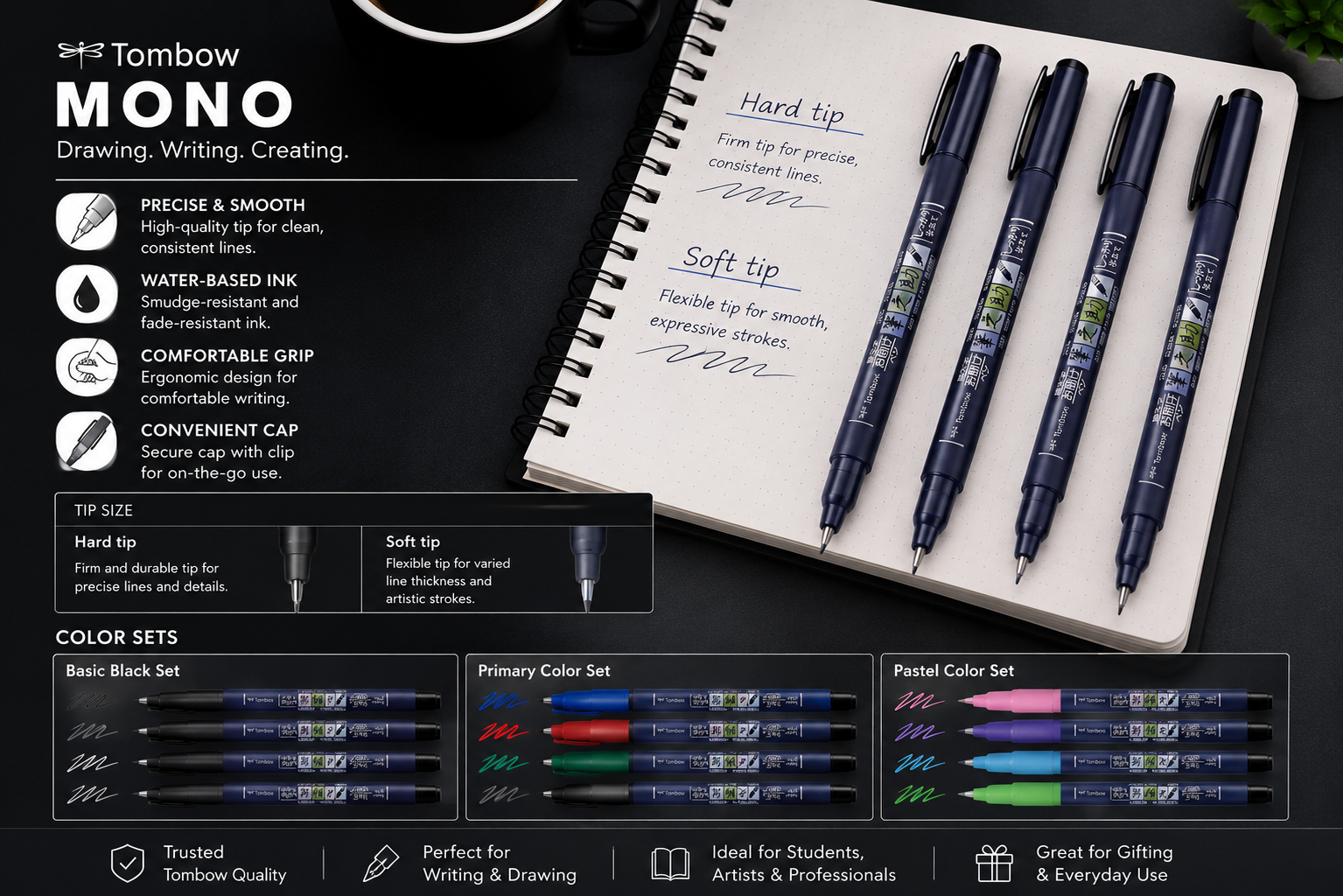
It comes in both hard and soft tip versions. The hard tip offers more control and is better suited to smaller writing and journal pages. The soft tip gives a more expressive, flowing quality ideal for larger lettering and titles. Both work best on smooth, non-textured paper — which aligns naturally with most premium journal stocks.
The pigment-based ink has minimal ghosting and bleed-through risk, and the water-based formula is clean and consistent. For beginner calligraphers, the Fudenosuke is widely recommended as the ideal entry point — it rewards practice without punishing mistakes.
Price range: $3–$4 per pen | Available in: Hard tip, Soft tip, color sets
6. Paper Mate InkJoy Gel — Best for Comfort During Long Sessions
Best for: Writers who journal in extended sessions and struggle with hand fatigue.
The Paper Mate InkJoy Gel is frequently dismissed as a “mass market” option, but experienced journalers who have tested it against premium alternatives often come back to it with real affection. The ink is notably smooth some testers at specialist review sites have ranked it above more expensive options for everyday writing comfort and the barrel design is light enough to reduce hand strain during extended writing sessions.
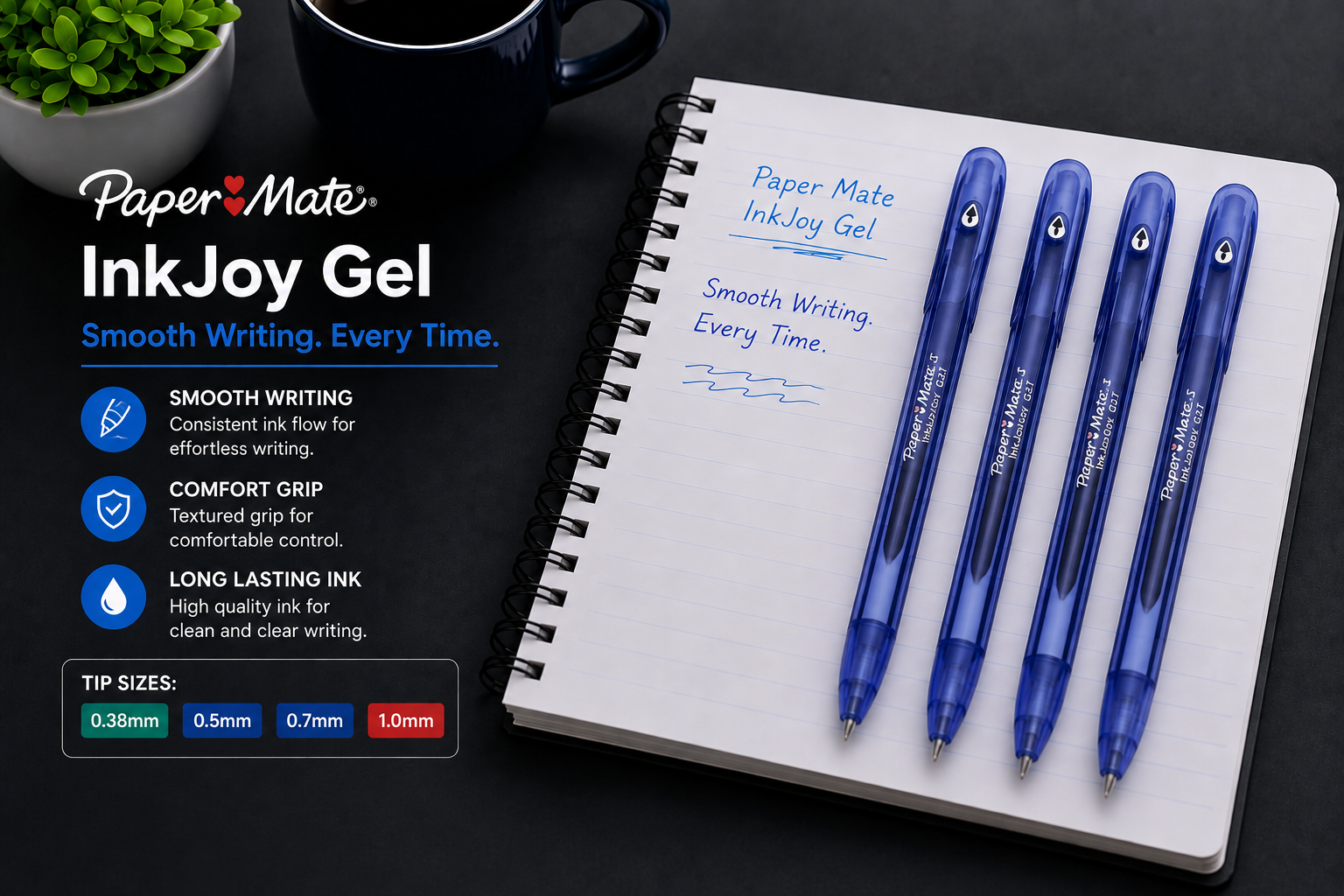
It’s available in multiple vibrant colors, which supports the color-coded journaling practice many writers use to track moods, themes, or time periods. The no-bleed, no-smear performance holds up reliably on standard and premium journal paper alike.
This is the pen you reach for when writing feels like a chore, because it removes every possible point of friction. Sometimes the best writing tool is simply the one that feels invisible in your hand.
Price range: $1.50–$2 per pen | Available in: 0.5mm and 0.7mm, multiple colors
7. Pilot Metropolitan Fountain Pen — Best for Writers Who Want to Slow Down
Best for: Intentional journalers, morning pages practitioners, anyone seeking a ritualistic writing experience.
The Metropolitan is the entry-level fountain pen most recommended by enthusiasts as the gateway to the category. It writes with a level of smoothness that no ballpoint or gel pen can fully replicate the liquid ink flows with almost no pressure required, which makes it uniquely restful on the hand over long writing sessions.
Writing with a fountain pen changes the pace of journaling. The slight deliberateness required filling the converter, choosing an ink, the care of the nib builds a small ritual around the practice. Many writers find this ritual itself helps them settle into deeper, more reflective writing rather than rushing through surface-level entries.
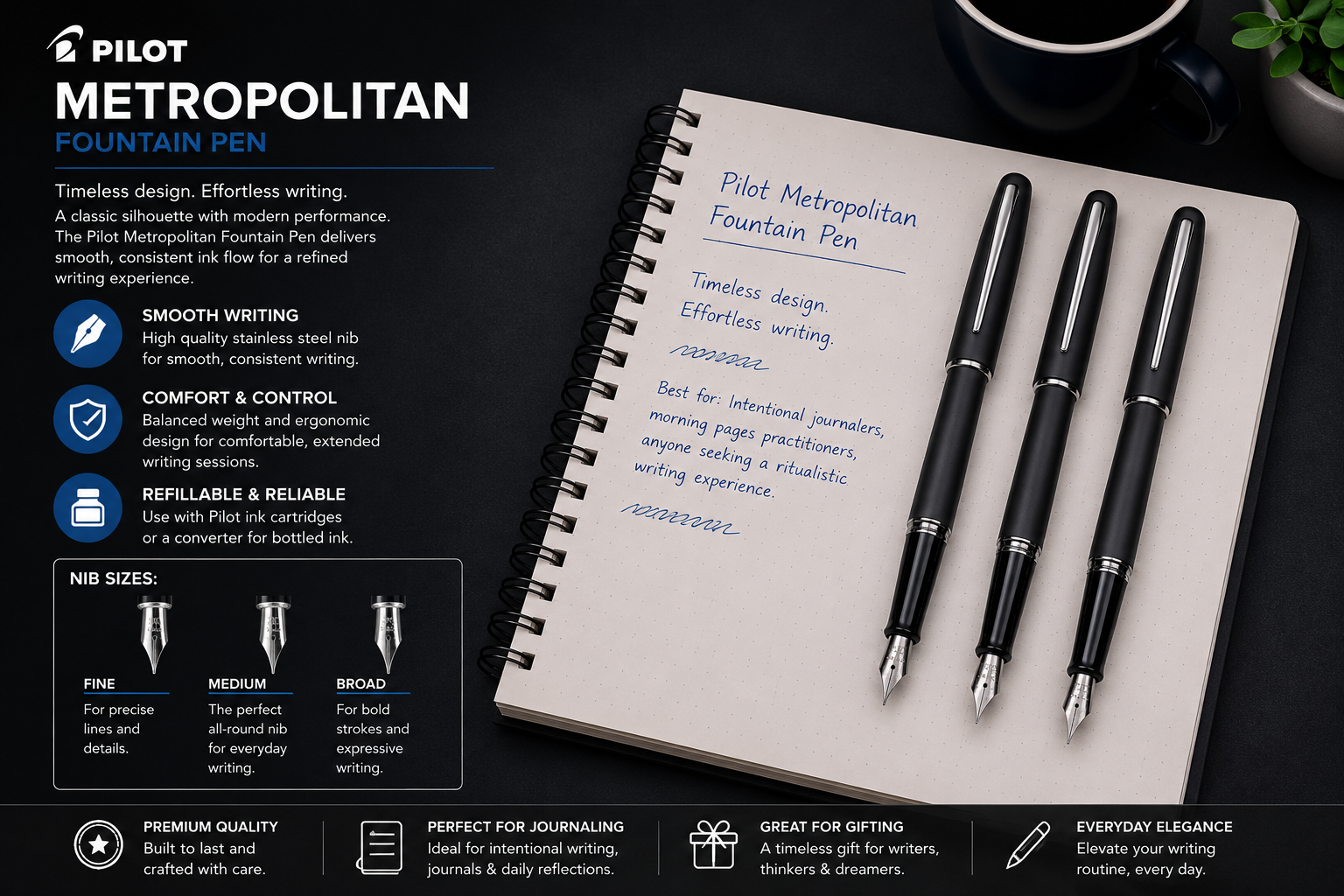
The Metropolitan is excellent with most standard journal papers but requires caution with very thin stock like Tomoe River, which can feather with wetter inks. The ink is refillable and interchangeable, meaning you can tailor color and behavior over time. At under $20, it’s the most affordable genuine fountain pen experience available.
Price range: $15–$20 | Nib sizes: Fine, Medium, Broad
Quick Comparison: Choosing the Right Pen for You
| Pen | Best For | Ink Type | Dry Time | Archival? |
|---|---|---|---|---|
| Sakura Pigma Micron | Permanence, detail | Pigment fineliner | Fast | Yes |
| Pentel EnerGel | Daily writing, left-handers | Quick-dry gel | Very fast | No |
| Uni-ball Jetstream | Speed, reliability | Hybrid ballpoint | Instant | No |
| Pilot G2 | Budget, versatility | Gel | Moderate | No |
| Tombow Fudenosuke | Artistic, decorative | Pigment brush | Moderate | Yes |
| Paper Mate InkJoy Gel | Long sessions, comfort | Gel | Fast | No |
| Pilot Metropolitan | Mindful, slow journaling | Fountain (interchangeable) | Varies | Depends on ink |
The One Thing Most Pen Guides Don’t Tell You
Your pen doesn’t journal. You do. The best pen is the one that removes resistance between the thought and the page. For some writers, that means the precise control of a 0.05mm fineliner. For others, it’s the effortless glide of a fountain pen. For the person who just needs to get words down every morning before the day overtakes them, it might simply be the smooth, fast, always-there Jetstream sitting in a desk cup.
Start with one pen from this list that matches how and why you journal. Use it for two weeks. Pay attention to what bothers you and what doesn’t. The rest will follow.
All pens reviewed based on firsthand testing across multiple paper types including Leuchtturm1917, Hobonichi Techo, Rhodia, and standard 80gsm composition notebooks. Prices reflect approximate retail as of May 2026 and may vary by region.