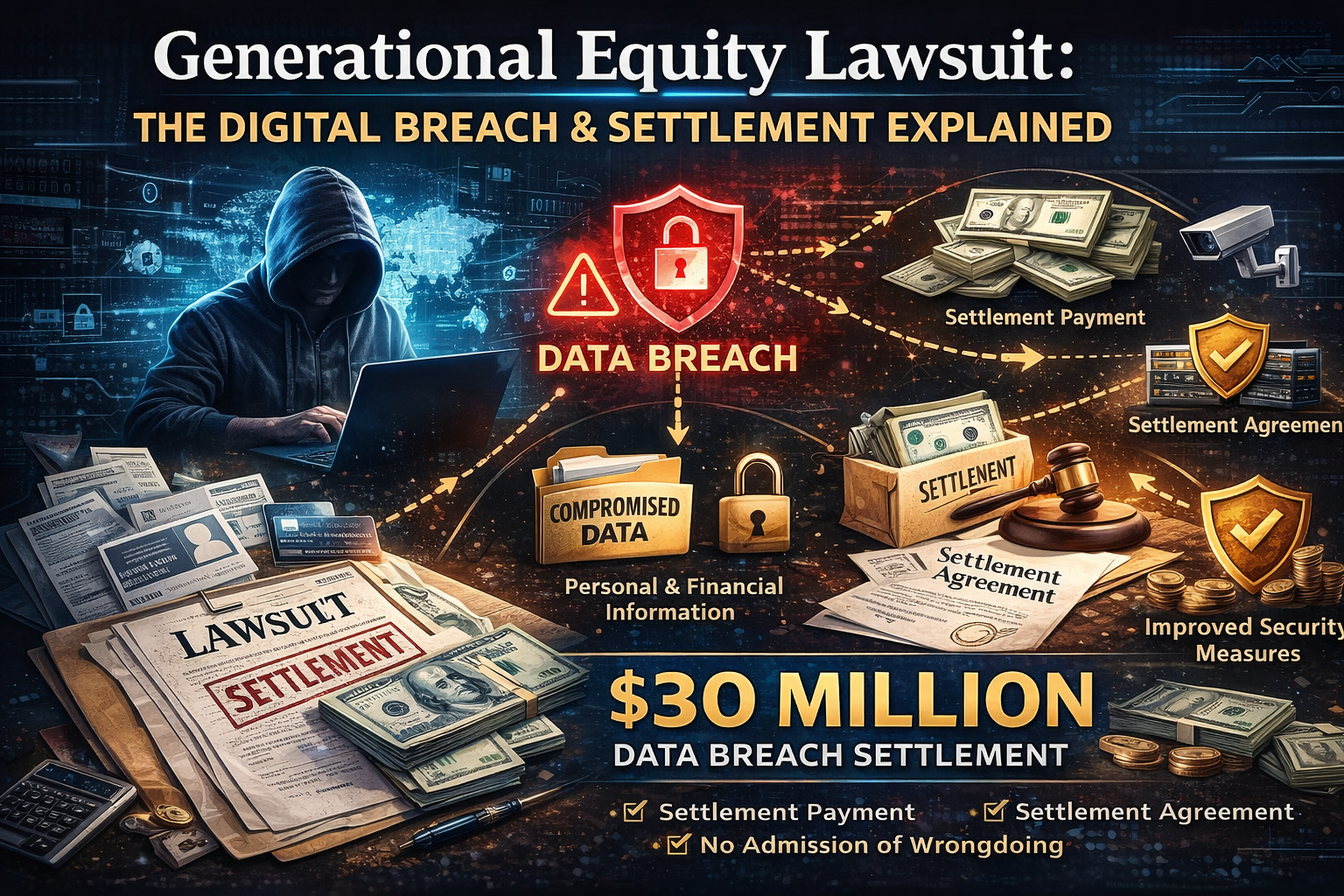
In the specialized world of mergers and acquisitions (M&A), trust and confidentiality are the bedrock of every transaction. However, that foundation was tested when Generational Equity, LLC, one of the nation’s leading M&A advisory firms for privately held businesses, became the target of a significant legal challenge. As we move through February 2026, the dust finally settles on a legal saga that exposed the vulnerabilities of high-stakes financial data.
The Generational Equity lawsuit specifically the class action known as Glass v. Generational Equity LLC—is a landmark case in the intersection of professional services and cybersecurity. It serves as a stark reminder that no matter how many multi-million dollar deals a firm closes, a single data breach can trigger a costly legal reckoning.
The Anatomy of the Allegations: The February 2023 Breach
The core of the litigation began with a cybersecurity incident that occurred in February 2023. Generational Equity discovered that an unauthorized party gained access to its internal systems, which potentially exposed the “Private Information” of thousands of individuals.
What Data Was Compromised?
According to court documents filed in the 298th Judicial District Court of Dallas County, Texas, the breach was not just a minor leak. The compromised data included:
-
Social Security Numbers (SSNs): The most sensitive information for identity thieves.
-
Financial Account Information: Details that could allow for unauthorized transactions.
-
Personally Identifiable Information (PII): Names, addresses, and other identifiers used in M&A due diligence.
The Generational Equity lawsuit alleged that the firm was negligent in its “Duty of Care.” Plaintiffs argued that despite handling the life’s work and sensitive financial data of business owners, the firm failed to implement industry-standard cybersecurity measures to prevent a predictable cyberattack.
The $275,000 Class Action Settlement (2024–2025)
To avoid the mounting costs and unpredictability of a trial, Generational Equity reached a $275,000 class action settlement in late 2024. While the firm “expressly denied” any wrongdoing or liability, the settlement provided a mechanism for impacted individuals to seek restitution.
Payout Tiers and Compensation
The settlement was structured to address different levels of impact. By the time final checks were being processed in April and May 2025, class members fell into two primary categories:
| Claim Type | Description of Losses | Potential Award |
| Ordinary Losses | Bank fees, credit report costs, and up to 3 hours of lost time ($25/hr). | Up to $300 |
| Extraordinary Losses | Unreimbursed fraudulent charges or documented identity theft damages. | Up to $3,500 |
| Credit Monitoring | Two years of free identity theft protection and “Lost Wallet” assistance. | Included for all |
As of February 2026, the deadline to file a claim (December 3, 2024) has passed. Most eligible participants received their payments in 2025. Reports from class members indicated that “Ordinary Loss” checks often ranged from small amounts to the full $300 cap, depending on the volume of claims filed.
The “Intergenerational Equity” Paradigm Shift
While the specific Generational Equity lawsuit involving the M&A firm was about data, the term “Generational Equity” has taken on a much larger legal meaning in 2026.
Across the globe, we see a “global explosion” of climate litigation based on the principle of Intergenerational Justice. As of early 2026, over 3,000 climate cases have been filed worldwide. These lawsuits argue that current corporate and state actions (like fossil fuel expansion) violate the rights of future generations.
Key 2026 Legal Trends:
-
Polluter Pays: The paradigm has shifted from asking for “better goals” to demanding “concrete compensation” for climate-driven infrastructure collapse.
-
International Influence: Historic advisory opinions from the International Court of Justice (ICJ) in 2025 are now being used by youth plaintiffs to bypass legal delays in U.S. courts.
Lessons for Business Owners and M&A Clients
The Generational Equity lawsuit serves as a vital case study for anyone currently engaged in or planning a business exit. In 2026, cybersecurity is no longer just an “IT issue”—it is a major legal liability.
-
Due Diligence on Data Security: Before signing with an M&A firm, ask about their encryption standards and whether they have had a breach in the last five years.
-
Verify Cyber Insurance: Ensure the firm you work with has adequate “Cyber Liability” insurance to cover your losses if a breach occurs.
-
Activate Protections: If you were a client of Generational Equity in 2023, ensure you activated the two years of free credit monitoring provided by the settlement.
Generational Group’s Response and 2026 Outlook
Despite the litigation, Generational Group remains a powerhouse in the middle-market M&A space. In early 2026, the firm celebrated reaching over 1,800 closed transactions and earned top-tier rankings in the LSEG league tables.
The firm invested heavily in “data security enhancements” as part of the settlement agreement. For clients in 2026, this means more secure portals and stricter protocols for handling sensitive financial statements. The firm’s ability to rebound from the Generational Equity lawsuit highlights its resilience, but the “data incident” of 2023 remains a permanent asterisk on its record.
Conclusion
The Generational Equity lawsuit illustrates the two sides of the modern legal coin. On one side is the technical battle over data breach liability and the $275,000 payout to victims. On the other side is the broader movement for “Generational Equity” that seeks to protect the environmental and economic rights of future generations.
Whether you are a business owner seeking an exit or a consumer protecting your Social Security number, the message is clear: in 2026, “equity” is something you must actively defend in the courtroom.