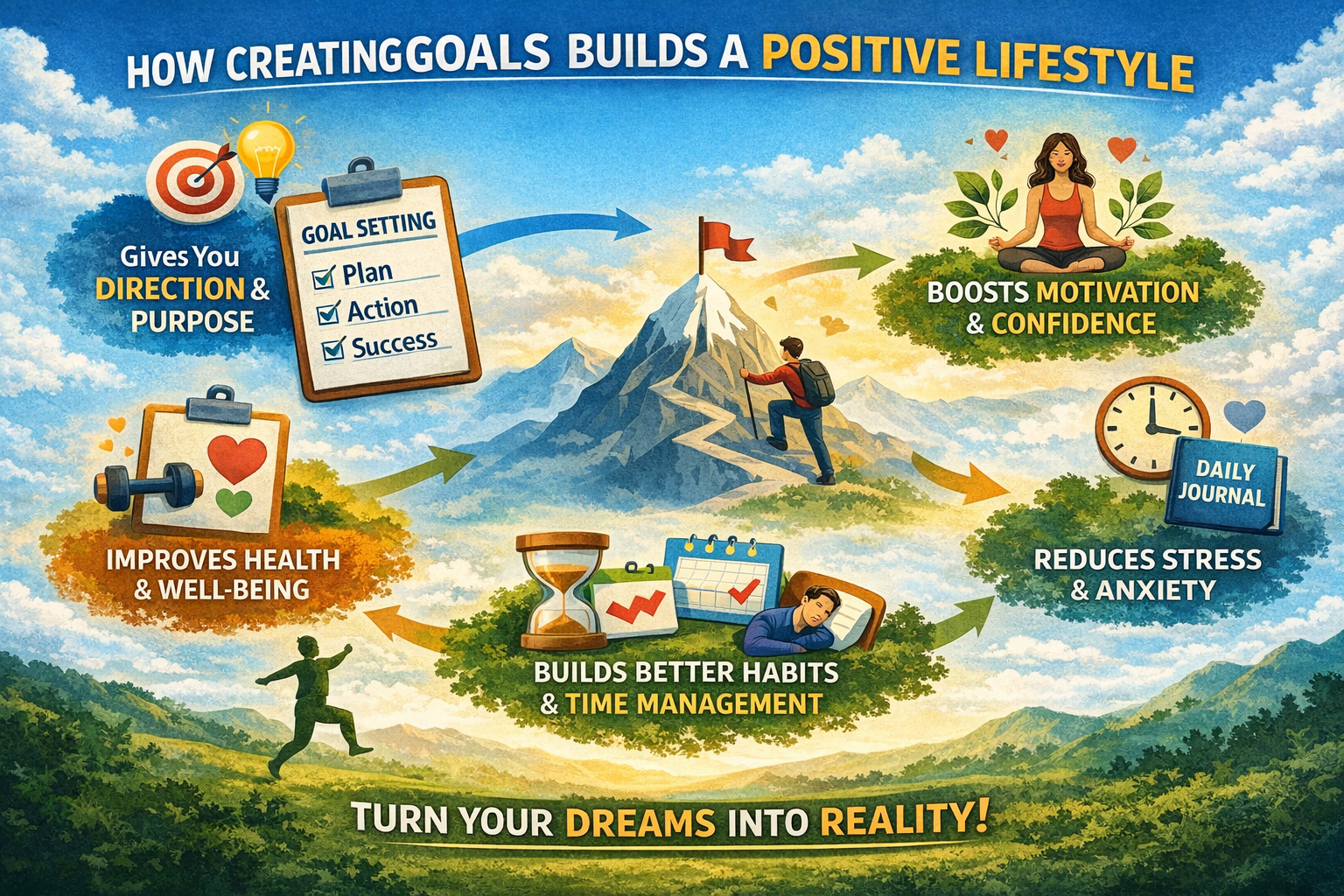
Creating goals is often viewed as a purely professional endeavor a way to climb the corporate ladder or increase productivity. However, from a psychological and physiological standpoint, goal-setting is actually the fundamental architecture of a positive lifestyle. It is the bridge between our current state and a future version of ourselves characterized by better health, deeper relationships, and increased mental resilience.
To understand how goals build and maintain a positive life, we must look at the science of the brain, the psychology of motivation, and the real-life applications of “intentional living.”
The Neurochemistry of Direction: Why the Brain Craves Goals
The human brain is naturally goal-oriented. When we set a target, our brain begins to release dopamine, a neurotransmitter often associated with pleasure, but more accurately described as the chemical of anticipation and motivation.
The Dopamine Reward Loop
A positive lifestyle is maintained through consistent energy. When you create “micro-goals” (small, achievable daily targets), you trigger frequent dopamine releases. This doesn’t just make you feel good; it reinforces the behavior. Over time, your brain associates the act of striving with positive emotions, creating a self-sustaining cycle of productivity and optimism.
Reducing Decision Fatigue
One of the biggest drains on a positive lifestyle is “decision fatigue”—the mental exhaustion from making too many choices. Goals act as a filter. If your goal is “to run a marathon,” the decision of whether to eat a salad or a burger at lunch becomes easier. By narrowing your focus, goals reduce stress and preserve mental energy for what truly matters.
Building Resilience Through the “Growth Mindset”
A positive lifestyle isn’t one that is free of problems; it’s one that has the tools to handle them. Goal-setting fosters what Stanford psychologist Carol Dweck calls a Growth Mindset.
When you set a goal and encounter a setback, you aren’t just “failing”—you are gathering data. This perspective shift is vital for maintaining a positive outlook. Instead of seeing a missed workout as a character flaw, a goal-oriented person sees it as a scheduling conflict to be solved. This prevents the “downward spiral” of negativity that often leads people to abandon healthy habits.
The Three Pillars of Goal-Based Positivity
To maintain a balanced lifestyle, goals should be distributed across three specific areas:
I. Physical Vitality (The “Engine” Goals)
Physical health is the foundation of mood. Research shows that goals related to sleep, hydration, and movement directly impact the prefrontal cortex, which regulates emotions.
-
Example: Setting a goal to walk 10,000 steps isn’t just about weight; it’s about the 20 minutes of vitamin D and the meditative movement that lowers cortisol levels.
II. Mental & Intellectual Clarity (The “Steering” Goals)
A positive lifestyle requires a sense of competence. Learning a new skill or reading a specific number of books a year prevents mental stagnation. When we grow intellectually, our self-esteem rises, which is a primary driver of a positive mood.
III. Social Connection (The “Anchor” Goals)
Loneliness is a major detractor from a positive life. Surprisingly, social goals are the most overlooked. Setting a goal to “call one friend every Tuesday” or “host a dinner once a month” ensures that your social battery remains charged, providing the emotional support needed during tough times.
Real-Life Example: The Transformation of “Sarah”
To see this in action, let’s look at a case study of a typical 35-year-old professional we’ll call Sarah.
The Starting Point: Sarah felt “stuck.” She had a good job but felt chronically tired, lacked hobbies, and spent her evenings scrolling through social media, which left her feeling inadequate and anxious. Her lifestyle was “passive”—she was reacting to life rather than leading it.
The Goal Intervention: Sarah decided to implement a tiered goal system to rebuild her lifestyle:
-
The “Low-Bar” Goal: Drink 2 liters of water daily. (To build immediate “wins”).
-
The “Skill” Goal: Learn basic woodworking. (To disconnect from digital stress).
-
The “Big” Goal: Complete a 5K race in six months. (To provide long-term direction).
The Result: By month three, Sarah noticed that her “Big” goal of the 5K forced her to go to bed earlier, which improved her mood at work. The “Skill” goal gave her a sense of identity outside of her job, reducing her work-related anxiety. The “Low-Bar” goal gave her a sense of control on days when everything else went wrong.
Sarah didn’t just “get fit”; she built a positive infrastructure. Her goals became the scaffolding that held her lifestyle together when she was tired or unmotivated.
How to Maintain the Momentum: The SMART+ Method
Many people fail at goal-setting because they set “vague intentions” rather than “structured goals.” To maintain a positive lifestyle, your goals must be:
-
Specific (e.g., “I will meditate,” not “I want to be calm.”)
-
Measurable (e.g., “10 minutes.”)
-
Achievable (Don’t start with 60 minutes if you’ve never tried it.)
-
Relevant (It must matter to you, not a social media influencer.)
-
Time-bound (e.g., “By 8:00 AM every morning.”)
The “+” Factor: Self-Compassion The secret to maintaining a positive lifestyle is the “plus” factor: Flexibility. If you miss a goal, a positive lifestyle dictates that you “never miss twice.” You acknowledge the slip, forgive yourself, and return to the path immediately. This prevents the “all-or-nothing” thinking that destroys most lifestyle changes.
The Long-Term Benefit: Finding “Flow”
Ultimately, creating goals leads to the state of Flow a concept developed by Mihaly Csikszentmihalyi. Flow is the state of being so involved in an activity that nothing else seems to matter. It is the pinnacle of a positive lifestyle.
When you have clear goals, you find Flow more often because you know exactly what you are trying to achieve. Whether it’s gardening, coding, or parenting, the presence of a goal turns a mundane task into a rewarding challenge.
Conclusion: Living by Design, Not Default
A positive lifestyle is rarely an accident. It is a deliberate construction. By setting goals, you move from a “default” lifestyle where you are shaped by external stressors and digital distractions to a “designed” lifestyle, where you are the architect of your own energy.
Goals provide the map (direction), the fuel (dopamine), and the armor (resilience) needed to navigate life with a sense of purpose and joy.