
Key Takeaways
- Healthy study habits start from the utmost care and concern of parents and guardians by being consistent in their values, setting structure, and leading by example.
- Only through the consistent use of active techniques like retrieval practice and chunking will learning be facilitated.
- Good health through sleep, reduced distractions, and specially designated time/space for learning are all ingredients of an ideal study atmosphere.
Helping children develop healthy study habits early sets them on a path not only to stronger grades but to lifelong learning skills. Here we will go through the importance of study habits, how to establish them step by step, a checklist of real-life examples, and tips you can try at home. This is something I’ve seen firsthand: as I helped my cousin in the City to create a weekly study-space routine, her focus and confidence were noticeably better in a matter of weeks.
Why Healthy Study Habits Matter for Kids
Regular and efficient study habits that children carry out will, of course, bring positive effects with regard to homework but beyond that:
- Through the use of time-management they get a life skill that is very transferable.
- Deep engagement with material (for example with spaced practice) occurs rather than last-minute studying (cramming).
- Research shows that just offering the right conditions (sleep, nutrition, quiet) leads to better cognitive performance.
- Among the latest studies, one shows that children with parents who had strong views on learning strategies were more likely to follow these strategies.
In a nutshell: we are not only instructing the simple “do your homework” rule but also teaching children to build habits that will help them in exams, university (or future work) and a lifetime of learning.
Read: 50+ Free Things to Get on Your Birthday in 2025 (Legit Deals & How to Claim Them)
Understanding the Stages: Study Habits by Age
The approach you take will depend on your child’s age. Here’s a simple breakdown:
Elementary (ages ~5-10)

At this stage, the focus is on routine, positive associations with learning, and supervision.
-
Short study bursts—10-20 minutes—work best.
-
A dedicated spot (even a corner of a table) helps build association between “this is study time” and focus.
-
Celebrate effort rather than only correct answers—this builds a growth mindset.
Middle School (ages ~11-14)

Here children begin juggling more subjects, assignments and responsibilities—so the habits evolve:
-
Introduce planners or digital calendars for tracking homework, projects and deadlines.
-
Teach study tools: flashcards, outlines, mind maps for essays, digital tools like Quizlet.
-
Break tasks into smaller chunks and encourage reflection: “What worked? What didn’t?”
High School (ages ~15-18)

Core Healthy Study Habits to Teach
We should look into the habits which every kid individually must get control of.
Set a Consistent Study Schedule
Summarizing: Creating a regular study routine at the same time each day helps the brain to understand that learning is done at that time – thus, concentration becomes easier and procrastination is less likely.
A consistent flow is what supports habit formation. Here is the way to children accomplish it:
- Choose daily or several days per week time for studying (after snack, before dinner, etc).
- Short sessions should be preferred – concentrate on short, efficient segments (e.g., 30-45 minutes) and determine the length according to the children’s age.
- Children can know when their study period starts and ends if they use a timer or a schedule chart.
Create the Right Environment
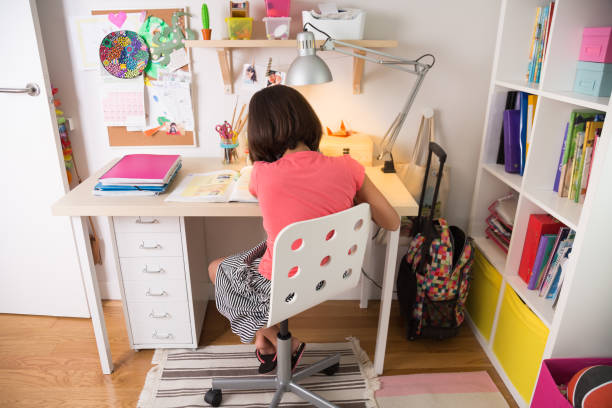
Parents often underestimate how much the study environment influences the performance of their children. This is what you should optimize:
- A quiet space dedicated (desk or table) with minimal distractions (TV off, phone away).
- Good lighting, comfortable seating, study supplies ready (not hunting for a pen!).
- Healthy brain fuel: ensuring children are not hungry, have water, and are rested.
Teach Active Study Techniques
Passive methods (simply re-reading notes) rarely lead to deep understanding. Research supports active techniques.
Some strategies:
- Retrieval practice: after reading a section, ask your child to recall key points without looking.
- Chunking: break large topics into smaller parts and focus one at a time.
- Teaching someone else: having the child explain the idea aloud (even to a stuffed toy) improves retention.
- Flashcards, mind-maps, and self-quizzing instead of passive highlighter use.
Prioritise Breaks and Recovery
The brain gets tired — little rest helps recharge.
- Use techniques like the Pomodoro: study 25 minutes, break 5 minutes, repeat.
- Encourage short physical movement or stretching during breaks.
- Ensure adequate sleep, since studies show poor sleep undermines focus and memory.
Foster a Growth Mindset and Encourage Reflection
Habits form when children believe their effort matters.
- Praise “you worked hard on that” rather than “you’re so smart”.
- Ask reflective questions: “What challenge did you face? What helped you?”
- Model mistakes: show your own that you learn and persist.
Monitor Progress and Adjust
- Use a weekly check-in: What study strategies worked? What didn’t?
- Adjust expectations by age and ability level.
- Celebrate progress, not just perfect outcomes.
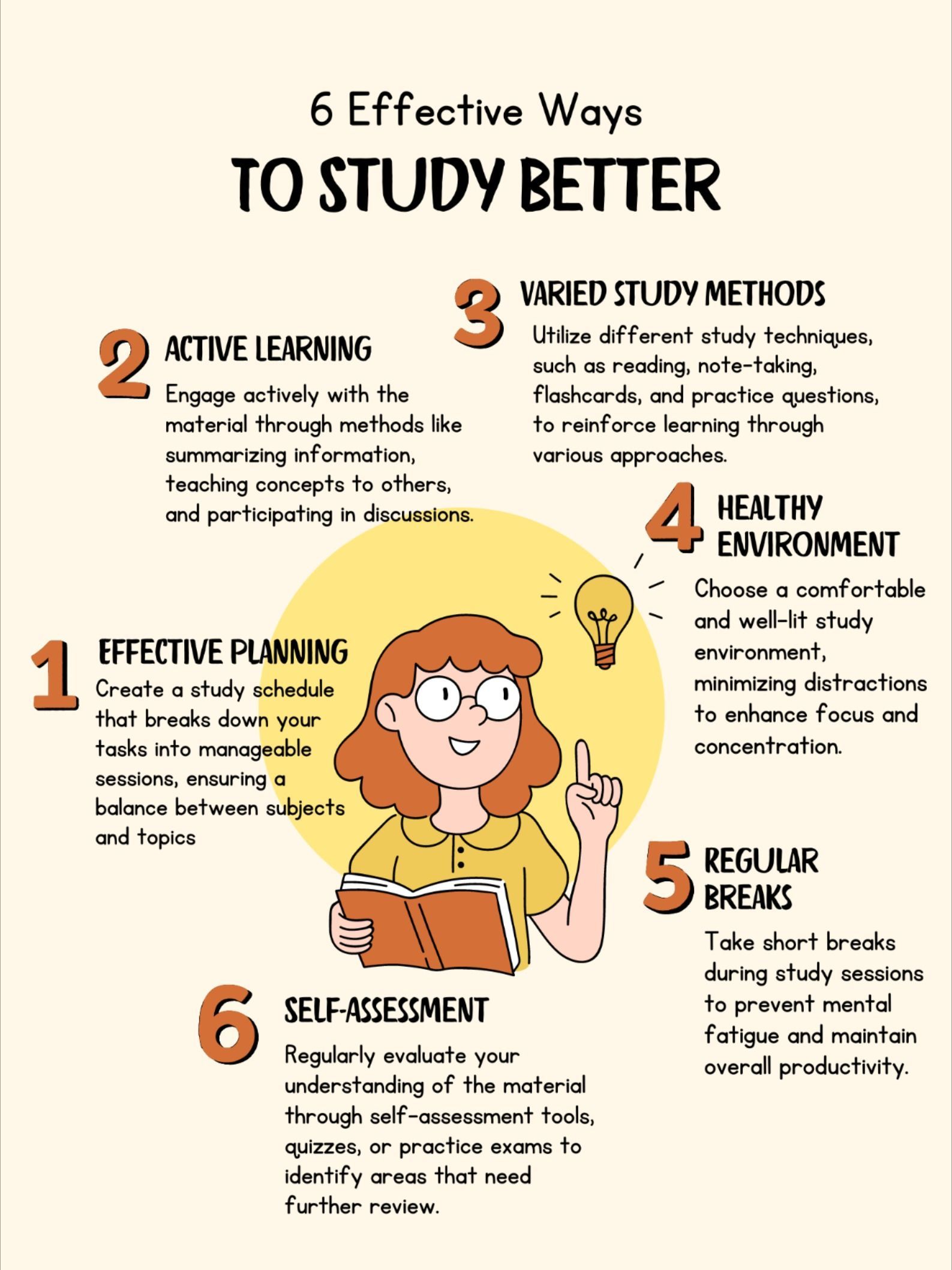
A Practical 7-Step Plan You Can Start This Week
-
Choose a study time each day (e.g., 6:30–7:30 pm) and mark it on a physical chart.
-
Designate a “study zone” — a desk or table with minimal distractions, away from the TV and mobile gadget activity.
-
Before the session begins, have your child list 1-2 learning goals (“I will finish the maths worksheet” or “I will summarise the science chapter”).
-
Use a timer (30 minutes for younger children, 45-60 for older) with a built-in break at the end.
-
During study: encourage retrieving information (child closes book and explains what they just read).
-
After the timer, discuss: What was easy? What was tricky? How will you tackle the tricky bit tomorrow?
-
End with a short reflection and healthy snack / movement break.
When I used this plan with my cousin in the City, we tied the study time to just after she cleaned up from the day’s chores and before she watched TV. The visual chart on the wall helped her track progress, and she reported feeling less stressed about homework within two weeks.
Common Pitfalls & How to Avoid Them
| Pitfall | Why it happens | What to do instead |
|---|---|---|
| Studying in bed or couch | Brain associates those places with rest, not focus. | Use a proper desk or table. Make “bed = sleep” only. |
| Cramming last minute | Procrastination + pressure → shallow learning. | Build study routine early; break tasks into small pieces. |
| All passive reading | Limits understanding and retention. | Incorporate retrieval, self-quizzing, flashcards. |
| Ignoring sleep and nutrition | Even brilliant strategy falters if the body is tired/hungry. | Prioritise 8+ hours of sleep, healthy snacks, and movement. |
| Parent doing everything | Child misses opportunity to build independence. | Guide, encourage and gradually hand over ownership. |
Conclusion
Building healthy study habits for kids is really not about forcefully making them drill every night, but rather inventing a system that they can take over, not only during their childhood but also later in life. Keep in mind: a consistent schedule + a supportive environment + active techniques + reflection = habits that last. There is no doubt that the earlier you start, the better the result will be.
FAQ
- How do I motivate my child to develop healthy study habits?
Put your main efforts into routine, positive reinforcement, and at the same time represent yourself as the learner.
2. What’s the best time of day for kids to study?
The most suitable time for the child to study is when he is energetic, letting very few distractions in and, above all, being consistent.
3. My child gets distracted easily—what can I do?
Eliminate distractions, break study time into short intervals and encourage the use of active learning methods.
4. Are digital tools helpful or harmful for study habits?
If digital tools are used deliberately they can be beneficial, however, it should be ensured that they do not become a source of distraction.
5. When should I expect to see results from implementing healthy study habits?
You will probably see better focus and less homework-related stress within a couple of weeks, whereas profound changes might take a semester or longer.
Check Out: 30+ Essential Best Book on Slow Living that You Must Read for a Calmer Life