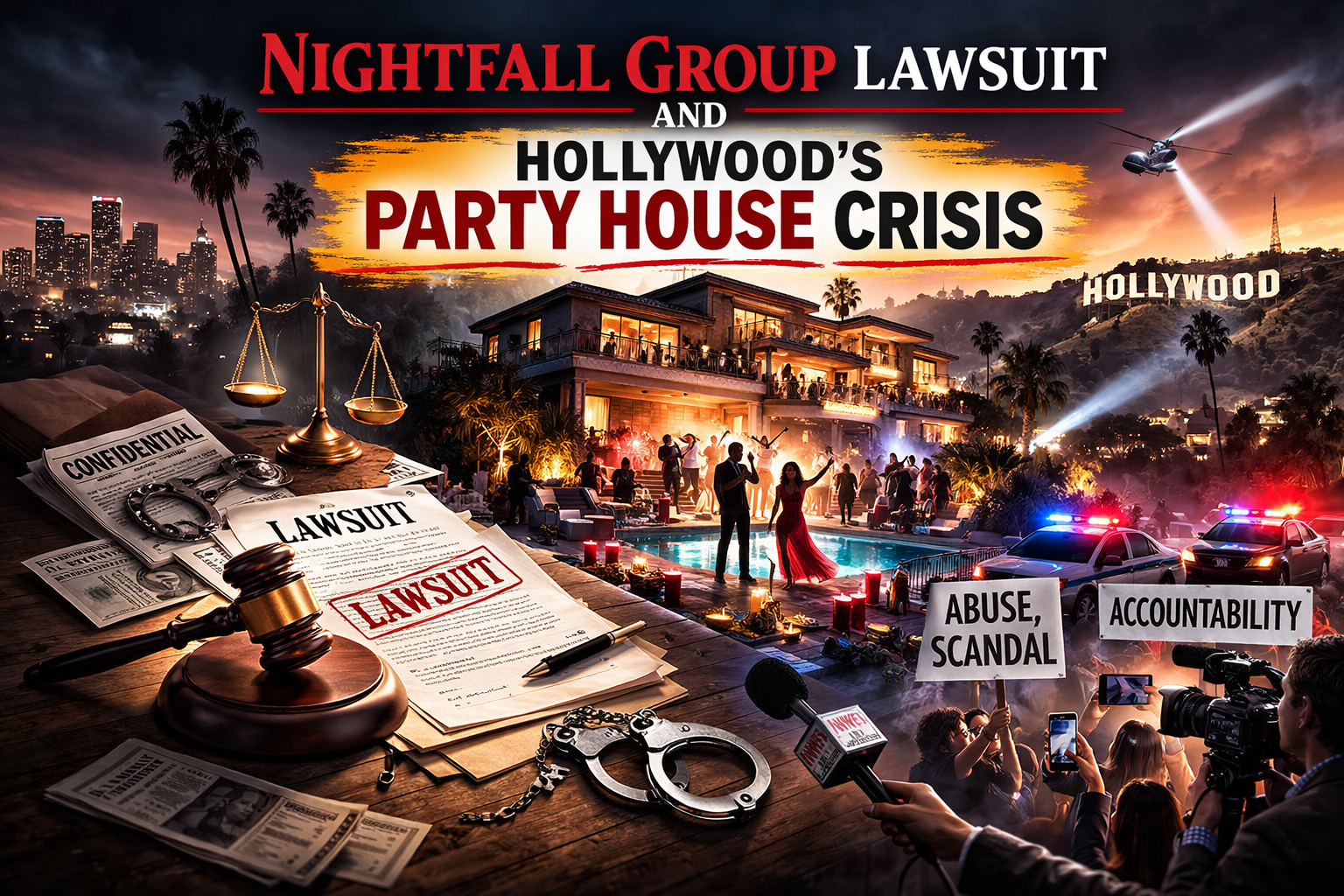
In the hills of Los Angeles, where the architecture is as dramatic as the people, a legal battle is unfolding that threatens to dismantle the “rags-to-riches” narrative of one of the city’s most prominent luxury rental moguls. As of February 26, 2026, the Nightfall Group lawsuit stands as a landmark case in the city’s fight against illegal short-term rentals, noise pollution, and the erosion of neighborhood integrity.
Led by Mokhtar Jabli, The Nightfall Group (operating under Ultimate Host, LLC) positioned itself as a premier concierge service, offering “villas” for up to $16,000 per night. However, a massive civil enforcement action filed by Los Angeles City Attorney Hydee Feldstein Soto alleges that this luxury empire was built on a foundation of systemic law-breaking and neighborhood disruption.
The Core of the Conflict: Illegal Short-Term Rental Arbitrage
The primary legal challenge in the Nightfall Group lawsuit centers on the company’s business model, which the City Attorney describes as “short-term rental arbitrage” on a massive scale.
Under Los Angeles’s Home-Sharing Ordinance, hosts are strictly limited to renting out only their primary residence—the place where they live for at least six months of the year. Furthermore, a person is prohibited from operating more than one short-term rental at a time.
-
The Allegation: The Nightfall Group allegedly leased hundreds of high-end properties from homeowners as “long-term rentals” and then surreptitiously subleased them as short-term stays.
-
The Violation: By operating as a “hosting platform” without following registration requirements, the company effectively bypassed city taxes, safety inspections, and housing regulations designed to prevent residential homes from becoming “underground hotels.”
250 Police Calls: The Public Nuisance Charge
Beyond administrative violations, the Nightfall Group lawsuit highlights a severe public safety issue. According to the complaint, the Los Angeles Police Department (LAPD) responded to Nightfall-associated properties more than 250 times in a two-year window in the Hollywood area alone.
A Neighborhood Under Siege
The lawsuit paints a vivid picture of the “party house” culture facilitated by Nightfall:
-
Violence and Crime: Police reports included responses to assaults with deadly weapons and grand theft.
-
Neighborhood Disruption: Residents in the Hollywood Hills and Bel-Air complained of “shaking houses” due to high-decibel bass, blocked evacuation routes (critical in fire-prone hills), and rampant litter and vandalism.
-
Persistent Offenders: One property at 9010 Hopen Place was reportedly the subject of 31 party-related calls for police assistance in just two years.
Settlement Updates and Legal Payouts (2025–2026)
As the case progressed through 2025, several key defendants began to settle with the city. In September 2025, City Attorney Feldstein Soto announced that three defendants associated with the 2023 lawsuit reached agreements to pay substantial civil penalties.
| Defendant | Civil Penalty Amount | Requirement |
| Kirill “Kirk” Ayzenberg | $215,000 | Prohibited from all short-term rental activity in LA. |
| 5554 Green Oak, LLC | $45,000 | Signage must state short-term rentals are prohibited. |
| Jungle Kerry, Inc. | $20,000 | Must inform all guests that loud parties are banned. |
These settlements, totaling nearly $280,000, were accompanied by a broader victory for the city: the return of at least 10 rent-stabilized units to the long-term housing market. This addresses one of the most critical points of the Nightfall Group lawsuit—the fact that luxury rental rings often take affordable housing off the market to serve transient, high-paying guests.
The “Bait and Switch” and Rags-to-Riches Scrutiny
The lawsuit also sheds light on the personal narrative of Mokhtar Jabli. Often appearing in social media and interviews as a self-made success story who once lived on the streets, Jabli’s business practices are now under the microscope.
The City Attorney’s office alleges a “bait and switch” scheme similar to other recently prosecuted rental rings (like the Skysun/Yurov case). In these schemes, defendants often provide false addresses for their listings to bypass Airbnb or VRBO registration blocks, only revealing the true location after a guest has paid thousands of dollars. While Jabli has filed denials in various proceedings, the volume of evidence—including LAPD declarations and neighbor testimony—continues to drive the Nightfall Group lawsuit forward.
Comparative Litigation: The 2026 Crackdown
The Nightfall case is not an isolated incident. It is part of a 2026 “Clean Sweep” initiative by the City Attorney’s Public Rights Branch aimed at protecting the City’s housing stock and neighborhood peace.
The Impact on Housing Affordability
A major legal argument used by the City Attorney is that companies like Nightfall exacerbate the housing crisis. When a rent-stabilized apartment is converted into a $1,000-a-night “viva,” it removes a home for a local resident. The Nightfall Group lawsuit alleges that several of the properties used were subject to the Rent Stabilization Ordinance (RSO), making their use as short-term rentals strictly illegal.
The Future of Luxury Rentals in Los Angeles
The outcome of the Nightfall Group lawsuit will likely dictate the future of the “luxury concierge” industry in California. If the city secures the permanent injunctions and the millions in civil penalties it seeks, the “arbitrage” model—where companies lease homes to sublease them as party villas—will effectively be dead in Los Angeles.
What Consumers and Neighbors Should Know:
-
Check for Registration: If you are renting a “villa” in LA, the listing must include a city-issued registration number.
-
Report Violations: The City Attorney has encouraged residents to use the MyLA311 service to report suspected illegal short-term rentals.
-
The “Party House” Ordinance: Property owners are now held civilly liable for the actions of their tenants. This means homeowners who lease to companies like Nightfall risk losing their properties or facing massive fines.
Conclusion
The Nightfall Group lawsuit is a cautionary tale of what happens when the “disruptor” mindset of the tech-sharing economy meets the rigid safety and housing needs of a major metropolis. For the residents of Hollywood and Bel-Air, the lawsuit isn’t just about fines; it’s about reclaiming their right to a peaceful night’s sleep. For Mokhtar Jabli and the Nightfall Group, the case represents a moment of reckoning: in 2026, the glamour of a Hollywood hills party house no longer provides a shield against the rule of law.
With litigation still pending against Jabli and Ultimate Host, LLC, the city is seeking the maximum penalty allowed—up to $2,500 per violation. Given the thousands of nights advertised, the final judgment could reach into the millions, signaling the end of the “wild west” era of Los Angeles short-term rentals
Read More- Tarnplanen: A Strategic Framework for Planning in Uncertain Times