
Journaling has become one of the most powerful tools for self-growth, emotional wellbeing, creativity, and spiritual connection. Whether you’re trying to understand how to start journaling, build confidence, reduce anxiety, heal from heartbreak, or grow spiritually, journaling can support you every step of the way.
But many beginners struggle with the same question:
Where do I begin?
This in-depth guide covers everything—from how to start daily journaling to how to start bullet journaling, art journaling, gratitude journaling, and even Bible or Quran journaling.
If you’ve ever asked yourself “what is journaling and how to start?”, this guide is your all-in-one answer.
What Is Journaling and How to Start
At its core, journaling is the practice of writing down your thoughts, feelings, experiences, and reflections. It is your personal space to explore your emotions, set goals, track habits, express gratitude, and understand your inner world.
You can start by:
-
Choosing a notebook or digital tool
-
Setting a few minutes aside every day
-
Writing without judgment
-
Using prompts if you feel stuck
-
Staying consistent, even if entries are short
There is no right or wrong way—only your way.

How to Start Journaling: A Universal Guide
If you’re completely new and wondering how to start journaling for beginners, follow these steps:
1. Pick Your Medium
You can journal using:
-
A physical notebook
-
A mobile app
-
A digital planner
-
Voice-to-text notes
-
A laptop document
Digital tools are great if you want to learn how to start digital journaling, while traditional notebooks help you slow down and reflect.
2. Create a Ritual
If you want to build consistency and understand how to start a daily journaling habit, make journaling part of a routine. For example:
-
Every morning with tea
-
Before bed
-
During lunch break
-
After prayer or meditation
A simple ritual helps you learn how to start journaling everyday without stress.
3. Start with Simple Prompts
If you don’t know how to start journaling prompts, try these:
-
What is one thing I want today?
-
What am I feeling right now?
-
What is stressing me?
-
What made me smile today?
-
What is one goal I want to work on?
Prompts help beginners understand how to start off journaling and eliminate fear of the blank page.
4. Keep It Short at First
Write for 5 minutes a day. That’s enough for anyone wondering journaling for beginners – how to start. You can expand your practice over time.
5. Be Honest With Yourself
Your journal is your private space. You can write raw, unfiltered thoughts. This is especially important for:
-
How to start journaling your feelings
-
How to start journaling your thoughts
-
How to start journaling for mental health
Healing begins with honesty.
How to Start a Journaling Habit (That Actually Lasts)
Many people give up after a week. The secret to how to start a journaling habit is making it easy:
-
Keep your journal visible
-
Use short entries
-
Try habit stacking (journal after brushing teeth)
-
Remove pressure—your journal doesn’t need to be perfect
-
Celebrate small wins
Small steps create long-term habits.

How to Start Journaling for Mental Health
Journaling is scientifically linked to reduced stress, better mood, and emotional clarity.
If you’re exploring how to start journaling for mental health, start by:
-
Labeling your emotions
-
Tracking mood changes
-
Describing stressful moments
-
Using gratitude to shift perspective
This practice also helps with:
How to Start Journaling for Anxiety
Focus on:
-
Listing your current worries
-
Asking “Is this in my control?”
-
Writing calming affirmations
How to Start Journaling for Depression
Try:
-
Tracking energy levels
-
Listing small daily accomplishments
-
Writing letters to your future self
Mental health journaling becomes a safe outlet for healing.

How to Start Journaling for Self-Improvement
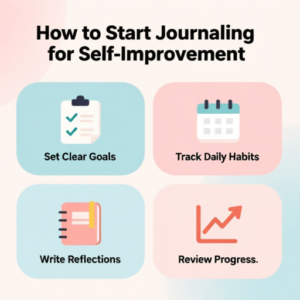
Millions of people use journals as a tool for personal growth. If you’re curious about how to start journaling for self improvement, try including:
-
Monthly goals
-
Habit trackers
-
Reflection questions
-
Lessons learned
-
Self-assessment pages
This practice creates self-awareness and discipline.
How to Start Journaling for Men
Men often aren’t taught to express emotions, so journaling can feel uncomfortable. Here’s how men can start journaling:
-
Begin with factual entries (What happened today?)
-
Add one emotion per entry
-
Write about goals, plans, workouts
-
Use structured templates
-
Keep entries private
Men who journal often experience better emotional regulation and clarity.
How to Start Gratitude Journaling
One of the easiest forms of journaling. Simply write:
-
Three things you’re grateful for
-
One person who helped you today
-
One good moment from the day
How to start gratitude journaling is simple but powerful—it improves mood and reduces negativity.
How to Start Journaling for Manifestation
Manifestation journaling focuses on writing your desires as if they are already true. You can start by:
-
Setting clear intentions
-
Writing affirmations
-
Visualizing your future
-
Using “I am becoming…” statements
This is a great guide for beginners wanting how to start journaling for manifestation.
How to Start Journaling for Healing
Whether emotional wounds, grief, or trauma—writing helps you process and recover.
To explore how to start journaling for healing, try:
-
Writing a letter to your past self
-
Describing what hurt you
-
Listing what you learned
-
Forgiveness exercises
-
Noting what still triggers you
Healing journaling is deeply personal and transformational.
How to Start Journaling After a Breakup
Journaling can help break emotional cycles and bring clarity.
If you’re searching for how to start journaling after a breakup, try:
-
Writing what the relationship taught you
-
Listing the reasons it ended
-
Writing what you deserve now
-
Setting boundaries for the future
-
Tracking emotional progress
Healing starts with understanding, not forgetting.
How to Start Journaling for Therapy
Therapists often recommend reflective writing. Here’s how to start journaling for therapy:
-
Track triggers
-
Write about therapy sessions
-
Identify patterns
-
Document coping mechanisms
-
Explore childhood memories
This journaling style supports emotional recovery.
How to Start Bullet Journaling
A popular organizational system that combines creativity with planning.
If you’re interested in how to start bullet journaling, begin by:
-
Choosing a dotted notebook
-
Creating an index
-
Making monthly and weekly spreads
-
Tracking habits, goals, tasks
-
Personalizing pages with symbols and bullets
How to Start Bullet Journaling for Beginners
Start minimal:
-
A simple calendar
-
To-do lists
-
Mood tracker
As you grow comfortable, add more artistic elements.
How to Start Junk Journaling
Junk journals are creative, messy, colorful, and fun. They use old papers, stickers, stamps, photos, envelopes—anything recycled.
To understand how to start junk journaling, follow these:
-
Collect old papers and craft scraps
-
Choose a notebook or make your own
-
Stick, paste, tear, and decorate freely
-
Add quotes or memories
-
Use textures and layers
It’s perfect for creativity and emotional expression.
How to Start Scrapbook Journaling
Scrapbook journaling blends photos, journaling, and decorative elements.
This is how to start scrapbook journaling:
-
Print photos
-
Add captions
-
Decorate pages with stickers
-
Write small memories or feelings
-
Use washi tapes, patterns, borders
Ideal for memory-keeping.
How to Start Art Journaling
Art journaling mixes writing and visual art. You can begin with:
-
Watercolors
-
Sketches
-
Doodles
-
Magazine cut-outs
-
Quotes
-
Color themes
If you want a creative outlet, how to start art journaling is a beautiful path.
How to Start Bible Journaling
Bible journaling is a spiritual practice where you write reflections, verses, and prayers.
How to Start Bible Journaling
You can begin by:
-
Choosing a Bible with wide margins
-
Highlighting meaningful verses
-
Adding notes or prayers
-
Using art, drawings, or stickers
-
Reflecting on how the verse applies to your life
How to Start Bible Journaling for Beginners
Start simple:
-
Pick one verse a day
-
Write how it makes you feel
-
Note any insight or guidance
How to Start Journaling the Bible
This includes deeper reflections, chapter summaries, and personal messages to God.
How to Start a Bible Journaling Group
Invite friends or community members, choose weekly themes, and share insights while respecting privacy.
How to Start Journaling With God
Spiritual journaling helps you strengthen your relationship with God.
You can start by:
-
Writing prayers
-
Documenting blessings
-
Writing what you feel God is teaching you
-
Noting answers to prayers
-
Asking questions through writing
How to Start Quran Journaling
Quran journaling involves writing tafsir notes, reflections, life applications, and prayers.
How to start:
-
Choose a Quran translation
-
Read slowly
-
Write what resonates
-
Note Arabic words you want to learn
-
Document reflections and dua
This deepens both understanding and spiritual connection.
How to Start Journaling Daily
Consistency is key. To learn how to start daily journaling, choose a time, set a 5-minute timer, and write anything without pressure.
How to Start Journaling Beginners Guide
If you want a simple blueprint:
-
Pick a notebook
-
Write the date
-
Answer a prompt
-
Write feelings
-
End with gratitude
That’s all you need to begin.
Tips on How to Start Journaling
Here are powerful tips for beginners:
-
Don’t judge your writing
-
Keep your journal private
-
Use prompts when stuck
-
Try different journaling styles
-
Allow your journal to evolve
-
Don’t aim for perfection
-
Be consistent, not perfect
These are the same principles behind how to start journaling tips and how to start journaling for beginners tips.